Category Tags:
Mechanical Testing
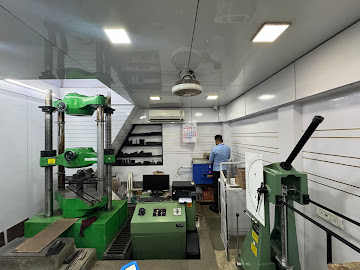
Our Mechanical Testing services are designed to evaluate the strength, durability, and performance of metals under various operating conditions. Using advanced testing methods and industry-standard procedures, we ensure materials meet required specifications and performance expectations.
Our core testing services include:
Tensile Testing – Measures material strength and elongation under stress.
Bend Testing – Assesses ductility and flexibility of materials.
Hardness Testing – Determines resistance to indentation and wear.
Impact Testing – Evaluates material toughness under sudden force.
PQR & WPS Qualification – Ensures welding procedures comply with industry standards and safety requirements.
These tests provide critical insights for material selection, product reliability, and quality assurance across industrial applications.
Our Mechanical Testing services are designed to evaluate the strength, durability, and performance of metals under various conditions. We offer
1. Tensile Test
Measures the material's ability to withstand tension until it fractures,
determining its ultimate tensile strength, elongation, and yield point.
2. Tensile with 0.2% Proof Stress
Evaluates the stress at which a material exhibits 0.2% permanent
deformation, providing a benchmark for yield strength.
3. Shear Test
Assesses the material's resistance to shear forces, ensuring its
performance under sliding or cutting stress conditions.
4. Bend Test on Plates and Pipes
Tests the ductility and soundness of materials by bending them to a
specific angle without cracking, simulating real-world deformation
scenarios.
5. Re-Bend Test
Examines the material's ability to withstand plastic deformation after
being bent and re-bent, ensuring durability under repetitive stress.
6. Reverse Bend Test
Determines the material's performance under repeated bending in
alternate directions, ensuring flexibility and toughness.
7. Hardness Test
Measures the surface resistance to indentation, providing insights
into material strength and wear resistance.
8. Impact Test
Evaluates the material's toughness and ability to absorb energy
under sudden impact, ensuring reliability in dynamic environments.
These tests provide critical insights for material selection and quality assurance.